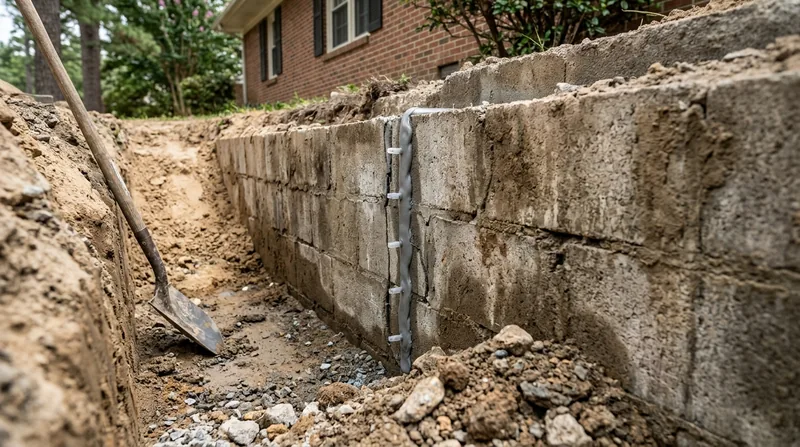




Foundation Crack Repair in Virginia Beach: What Tidewater Homeowners Need to Know
If you have found a crack in your foundation wall, a Foundation Crack Repair in Virginia Beach plan starts with understanding why the crack opened in the first place. Most homes here sit on slab-on-grade or low block stem walls, from the 1950s brick ranches in Great Neck and Thalia to the 1970s colonials in Kempsville and Windsor Woods. The ground under all of them is flat Tidewater sand, silt and clay, and the water table often sits only a few feet down. That means nor'easters, tropical storms and tidal creek flooding push water hard against the foundation, and soft soil settles unevenly under the footing. A crack is usually the visible result of that movement, not the root cause. We inspect the crack, trace where the water is actually coming from, and match the repair method to the failure. For the full picture of how water moves through a Virginia Beach foundation, start with our basement waterproofing service.
Why Foundation Cracks Are So Common in Virginia Beach
Virginia Beach sits on flat, low-lying ground where the water table can rise to within a few feet of the surface after a heavy rain. When that happens, hydrostatic pressure builds against the foundation wall and finds the weakest point, usually a cold joint, a block mortar line, or a hairline shrinkage crack from the original pour. The city's building stock makes this worse. Slab-on-grade homes in Bayside and Lynnhaven have no basement to relieve pressure, so water pushes at the slab edge and stem wall. Waterfront cottages in Sandbridge and Chic's Beach take the extra load of tidal surge. Add loblolly pines and crape myrtles dropping roots near footings, and you get soil that shifts season to season. The result is the same call we get every spring: a wet stain on the block, a white chalky line of efflorescence, or a crack that was hairline last year and is now wide enough to slide a coin into.
- Hydrostatic pressure from a high water table forces water through hairline cracks and cold joints.
- Soft Tidewater sand and clay settle unevenly and stress the footing under slab and stem-wall homes.
- Tree roots from pines and crape myrtles dry and shrink the soil, then re-wet it, cycling the foundation.
- Nor'easters and tropical storms drive water against the wall faster than the soil can drain it.
- Efflorescence and a musty smell in a utility room usually mean moisture is already moving through the wall.
None of these problems fix themselves, and a crack that only seeps today can widen through another freeze-thaw season. For the official position on structural repair permits, check the City of Virginia Beach building department before any structural work begins.
Key info: A homeowner in Windsor Woods called us after a nor'easter left a wet stripe along the block stem wall in the utility room. The crack was a vertical shrinkage crack, not a structural failure. Epoxy injection closed it in a single visit, and we extended the downspouts to move roof water away from the same corner.
How We Repair Foundation Cracks in Virginia Beach Homes
Every crack gets inspected before we quote a method. We look at the width, the direction, whether it is vertical, diagonal or stair-stepped, and whether water is actively moving through it. We check the grading and downspouts, because a crack that keeps getting fed will keep leaking no matter how well we seal it. Then we match the repair to the cause. A non-structural crack gets injection. A crack that is really a symptom of hydrostatic pressure gets a drainage answer alongside the seal. If the wall is bowing or the crack is wide and shifting, we bring in carbon fiber straps or wall anchors rather than a patch that will fail again.
- We inspect the crack and the surrounding wall, and we check grading, downspouts and any sign of efflorescence.
- We identify whether the crack is non-structural or a symptom of pressure, settlement or a bowing wall.
- We drill injection ports along the crack at the correct spacing for the wall material.
- We inject epoxy for structural hairline cracks or polyurethane for active leaks that need to flex with movement.
- We seal the surface, clean the area, and confirm the crack is closed before we leave.
- We recommend drainage or grading corrections when the crack will otherwise reopen.
If the inspection shows water is coming up through the slab rather than through the wall, the right answer is usually an interior drain tile system tied to a sump basin, not another injection port.
Key info: In Kempsville, a two-story colonial had a diagonal crack at the corner of the garage-level utility room. The crack was active after every heavy rain. Polyurethane injection stopped the leak, and we added a downspout extension and re-graded the soil so the same corner stops collecting water.
Crack Repair Methods We Use and When Each One Fits
Not every crack takes the same repair. The table below shows the methods we use most in Virginia Beach and the conditions each one is built for. We choose based on the crack itself, not on what is easiest to sell.
| Approach | Description | Best for |
|---|---|---|
| Epoxy injection | Structural epoxy fills the crack and bonds the concrete back together. | Non-structural hairline and shrinkage cracks that are not actively leaking. |
| Polyurethane injection | Flexible foam expands and seals the crack against active water. | Cracks that seep after rain or sit below the water table. |
| Surface sealing and parging | A waterproof membrane and parging close the wall face. | Porous block stem walls with widespread seepage, not a single crack. |
| Carbon fiber straps | Straps stabilize a wall that is bowing or moving inward. | Wide or shifting cracks tied to lateral soil pressure. |
| Drainage correction | Grading, downspout extensions and footing drainage relieve pressure. | Cracks that keep reopening because water keeps pushing. |
When the wall is actually bowing, crack injection alone will not hold it, and our bowing wall repair service addresses the structural side before we seal anything.
Foundation Crack Repair Cost in Virginia Beach: What to Expect
Most single-crack injections in Virginia Beach start at $450, and that figure covers a straightforward vertical or hairline crack with ports, injection and cleanup. The price moves from there based on how many cracks you have, how wide they are, whether the crack is active, and whether we need to reach a below-grade stairwell or a tight utility room. Access matters. A crack behind a finished wall or under a low deck takes longer than one on an open stem wall. If the inspection turns up hydrostatic pressure, the quote will include a drainage solution, because sealing a crack that is being fed by groundwater is a temporary fix. Get two or three estimates and ask each contractor to explain the method, not just the number. Our full pricing overview lays out the ranges before you call.
Hiring a Foundation Crack Repair Contractor Near Virginia Beach
Hiring for crack repair near Virginia Beach is mostly about asking the right questions before anyone drills a port. A legitimate contractor carries Virginia contractor licensing and liability insurance, and can produce a certificate on request. Ask how they decide between epoxy and polyurethane, and whether they inspect for hydrostatic pressure or just fill the crack. Ask for local references from homes like yours, whether that is a slab ranch in Thalia or a raised cottage in Sandbridge. Confirm who pulls any permit if structural repair or drainage alteration is involved, because rules vary by jurisdiction and the building department has the final word. If you are in an HOA, check whether exterior drainage changes need approval first. When you are ready, contact us for a free estimate and we will walk the foundation with you.
Foundation Crack Repair in Virginia Beach: Pricing Guide
| Service | Price | Details |
|---|---|---|
| Single crack epoxy injection | Starting at $450 | Covers one non-structural hairline or vertical crack with ports, injection, and cleanup on an accessible wall. |
| Active leak polyurethane injection | Starting at $550 | Flexible foam seal for a crack that seeps after rain, including surface prep and confirmation the leak has stopped. |
| Multiple crack repair | Starting at $850 | Two or more cracks injected in one visit, priced by count, width, and whether the wall is block or poured concrete. |
| Structural stabilization | On estimate | Carbon fiber straps or wall anchors for a bowing wall, quoted after an on-site look at the movement and soil pressure. |
| Travel | Included | in Virginia Beach and surrounding areas, with no separate call-out or mileage fee added to the quote. |
| Estimate | Free | Response within 24 hours at (757) 217-1799, with no obligation to book the repair. |
Indicative pricing, the exact cost depends on square footage, finish, and site access. Free personalized estimate within 24h at (757) 217-1799.


