Why Virginia Beach Foundations Take On Water: The Tidewater Water Table Explained
If you live in Virginia Beach, you already know that water is never far away. Between the Atlantic Ocean, the Chesapeake Bay, and the Lynnhaven River system, the entire Tidewater region sits at or near sea level. What many homeowners do not realize is that this geography creates a high water table that puts constant pressure on foundations, even when it has not rained in days. The water table is simply the upper surface of the zone where soil is saturated with groundwater. In Virginia Beach, that surface can rise to within a foot or two of your basement floor during wet seasons, king tides, or prolonged nor'easters.
When the water table rises, it does not just sit quietly underground. It pushes against your foundation walls and seeps through the porous concrete, block joints, and cove seams where the floor meets the wall. Many homeowners first notice a musty smell, then damp patches, then actual standing water. Because the cause is groundwater rather than a roof leak or a burst pipe, standard fixes like patching cracks from the inside rarely solve the problem for long. Understanding the water table is the first step toward a dry foundation in Hampton Roads.
Tidewater Sandy Soil Drainage: Why the Ground Cannot Keep Up
Tidewater sandy soil drainage is a double-edged sword. On one hand, sand drains quickly, which is why your yard rarely floods after a light shower. On the other hand, sand has very little ability to hold back water under pressure. When the water table is high, sandy soil becomes a saturated sponge, and hydrostatic pressure forces water toward the path of least resistance, which is often your basement or crawl space. Unlike clay soils that swell and block water, sandy soils let water move freely until it reaches your foundation.
This is why Basement Waterproofing in Virginia Beach must account for both surface water and rising groundwater. A simple exterior grading fix or a downspout extension helps with rain runoff, but it does nothing for water that is already in the ground. The sandy profile also means that water can travel laterally from a neighbor's yard, a nearby ditch, or a tidal creek, so your foundation can take on water even if your own lot looks dry. Local contractors who understand Tidewater soil conditions can design a system that manages both sources.
Wet Foundation Hampton Roads: Signs Your Home Is Taking On Water
A wet foundation in Hampton Roads often announces itself in subtle ways before you see standing water. You might notice white powdery deposits on the walls, which is efflorescence, a sign that water is moving through the concrete and leaving minerals behind. You might see dark staining at the base of the walls, rust on the bottom of a water heater or furnace, or a floor that feels slightly damp underfoot. Musty odors in the basement or crawl space are another classic sign, especially in older homes near the beach or in neighborhoods built on filled marshland.
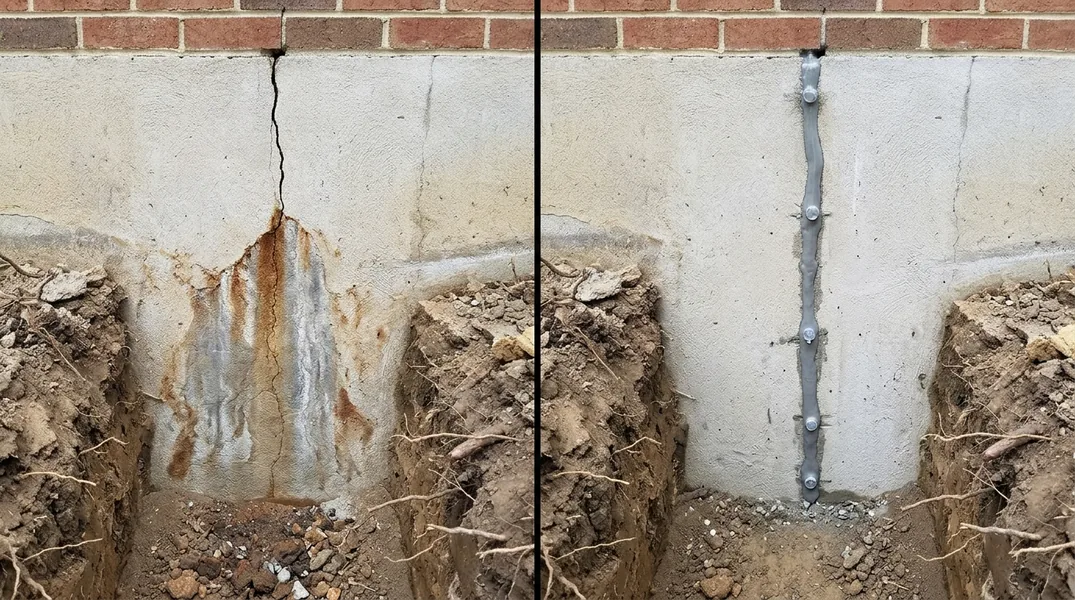
More serious symptoms include bowing walls, horizontal cracks, and doors or windows that stick more than they used to. These suggest that hydrostatic pressure and soil movement are affecting the structure, not just the finish. If you see any of these signs, it is worth getting a professional assessment before the next heavy rain season. A local expert can tell you whether you need Foundation Waterproofing, drainage improvements, or a combination of both. Ignoring early signs usually leads to more expensive repairs later.
Sump Pump Virginia Beach: The First Line of Defense Against Rising Groundwater
For most Virginia Beach homes with a basement or a low crawl space, a sump pump is the most important piece of waterproofing equipment you can own. A properly sized and installed sump pump sits in a pit at the lowest point of the foundation and automatically removes water before it can rise to the floor level. In a high water table area, the pump may run frequently during wet months, which is exactly what you want. The key is to have a reliable unit with a backup power source, because the storms that bring the most water are often the same storms that knock out electricity.
A sump pump alone is not a complete system, however. It needs a path for water to reach the pit, which is where an Interior Drain Tile System comes in. Drain tile collects water along the perimeter of the foundation and directs it to the sump pit, where it can be pumped out and away from the house. Together, these two components handle the constant groundwater pressure that defines Tidewater living. If your existing pump runs constantly or cycles on and off every few minutes, it may be undersized or the pit may be filling faster than the pump can handle.
Exterior Basement Waterproofing and Drainage: Keeping Water Away Before It Arrives
While interior systems manage water that has already reached the foundation, Exterior Basement Waterproofing aims to stop water before it gets there. This typically involves excavating around the foundation, applying a waterproof membrane or coating to the exterior walls, and installing a drainage system that carries water away from the house. In a high water table area, exterior work must be done carefully, because the soil may be saturated and the excavation may fill with water. Experienced local crews know how to handle these conditions safely and effectively.
Exterior drainage also includes managing surface water. Gutters that discharge too close to the foundation, grading that slopes toward the house, and paved areas that trap water all contribute to foundation water problems. A comprehensive plan might combine exterior waterproofing, regrading, and downspout extensions with an interior drain tile system and sump pump for redundancy. Because every lot in Virginia Beach is different, the right combination depends on your soil, your elevation, and how close you are to tidal water. A professional assessment is the only way to know which approach will work for your home.
Foundation Water Problems Near Me: When to Call a Virginia Beach Waterproofing Pro
If you are searching for foundation water problems near me in Virginia Beach, you are probably already seeing symptoms that concern you. The best time to call is at the first sign of moisture, not after a finished basement has been ruined. A professional can inspect your foundation, check the water table conditions around your home, test your sump pump, and recommend a solution that fits your budget. Many homeowners are surprised to learn that a targeted repair or a single system upgrade can solve a problem they assumed would require a full excavation.
Virginia Beach Waterproofing serves homeowners throughout the area with local expertise in high water table conditions, sandy soil drainage, and tidal influences. If you would like a straightforward assessment of your situation, you can request a free estimate or call (757) 217-1799 to speak with someone who understands Tidewater foundations. You can also review pricing online to get a sense of what different solutions cost. Do not wait for the next storm to find out how your foundation handles water.
Looking for a professional basement waterproofing contractor in Virginia Beach? Virginia Beach Waterproofing responds fast for all your basement waterproofing needs.
Get a Free QuoteOur services: Basement Waterproofing · Interior Drain Tile System · Exterior Basement Waterproofing